Shelf Life is now live on Stake. A poltergeist haunts a pottery shop, and the shelves are 6 columns wide and 5 shelves high. Groups of five or more equal pieces touching up, down, left or right win and break; the pieces above fall and new ones drop in until nothing wins.
The poltergeist does not pay anything himself. He gives the shelf a nudge, and what falls decides how much every win of the spin is worth.
The Wobbler falls before anything pays
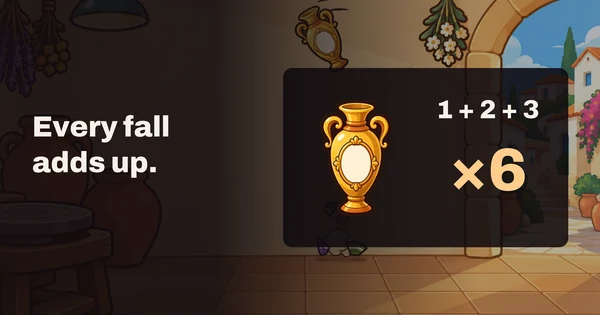
A Wobbler is a gilded vase painted 1, 2 or 3. When one lands, the poltergeist bumps the shelf before any win is counted, and the Wobbler tips over. It falls down its column, smashing up to 4 pieces below it, until it reaches the floor or a sardine tin. A Wobbler in its way falls along with it.
Wobblers never pay. The fallen Wobblers and the smashed pieces leave the shelf, new pieces drop in, and only then are the groups counted. In the base game a Wobbler lands about 1 spin in 5.

The Mess multiplies every win of the spin
Every fall adds its Wobblers' painted values, plus 1 for every piece it smashed, to the Mess, up to ×100. The Mess then multiplies every win of that spin. In the base game and the bet modes it starts each spin at ×1.
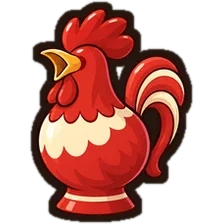
For a calculation example: a Wobbler painted 2 lands and smashes 4 pieces before the first win. The fall adds 2 + 4 = 6, so the Mess goes from ×1 to ×7. Five Rooster Jugs have a paytable value of 0.63× the base bet; under that Mess they pay 0.63 × 7 = 4.41× the base bet.
After hours: three free-spin features
Sardine tins never pay and never break. They slide down with the pieces under them, no new tin drops in, and they stop a falling Wobbler. Tins on the shelf start the features:
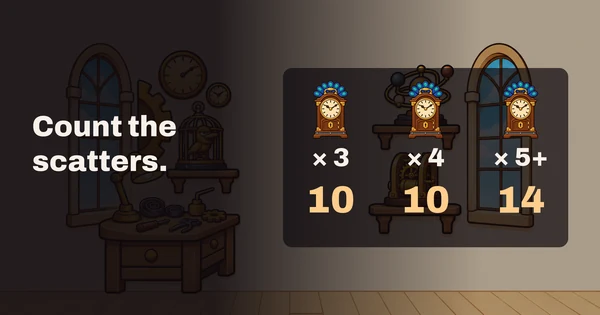
- Three tins: Zoomies. Ten free spins with a Wobbler on every spin and a second one about 1 spin in 2.
- Four tins: 3 A.M. Twelve free spins that start with the Mess at ×10 and two Wobblers every spin.
- Five or more tins: Nine Lives. Fifteen free spins from ×20, a second Wobbler about 1 spin in 2, and every fall counts twice.
In free spins the Mess does not start again each spin: it keeps its value from one spin to the next and only grows. Three or more tins on a free spin add four more spins, up to 150 free spins in all.

Ways to play
Open Sardines costs 3× the bet and brings tins more often and Wobblers about twice as often. Swat Spin costs 50× the bet: one spin with 3 Wobblers on the top shelf, in 3 different columns. Zoomies can be bought for 100× the bet and 3 A.M. for 400×; the Mystery Box costs 160× and plays Zoomies (80%) or 3 A.M. (20%). A price buys an entry, never a result.
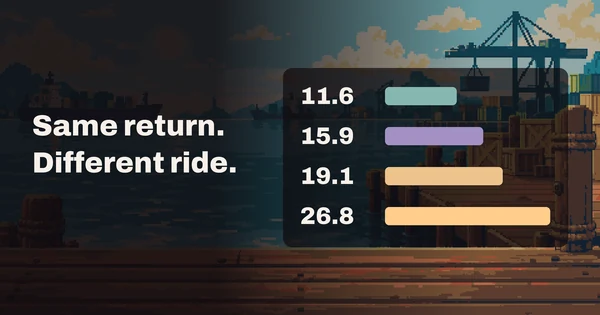
The Shelf Life game page has recorded gameplay, every piece and the full rules. Its theoretical RTP is 96.70% in every mode, and the maximum win is 15,000× the base bet; the round ends when it is reached. These are long-run mathematics and a ceiling, not predictions for a session. Our RTP and volatility guide explains the difference.